
The new London Greenground Map went live just before Easter and over 5000 people have visited the site over the past week. So I’m keeping one eye on social media and feedback, while also going ahead with learning more about ecological design.
After taking the online permaculture course last month I got quite interested in companion planting and how to underplant the fruit bushes with a layer of greens and herbs to maximise the space and have more variety of edibles (last year I mostly ended up with grass and weeds). I also picked up a bit older permaculture book from my local library and although it’s mostly meant growing in larger spaces, I really liked, how they designed their balcony garden. So I had a go at sketching one myself!

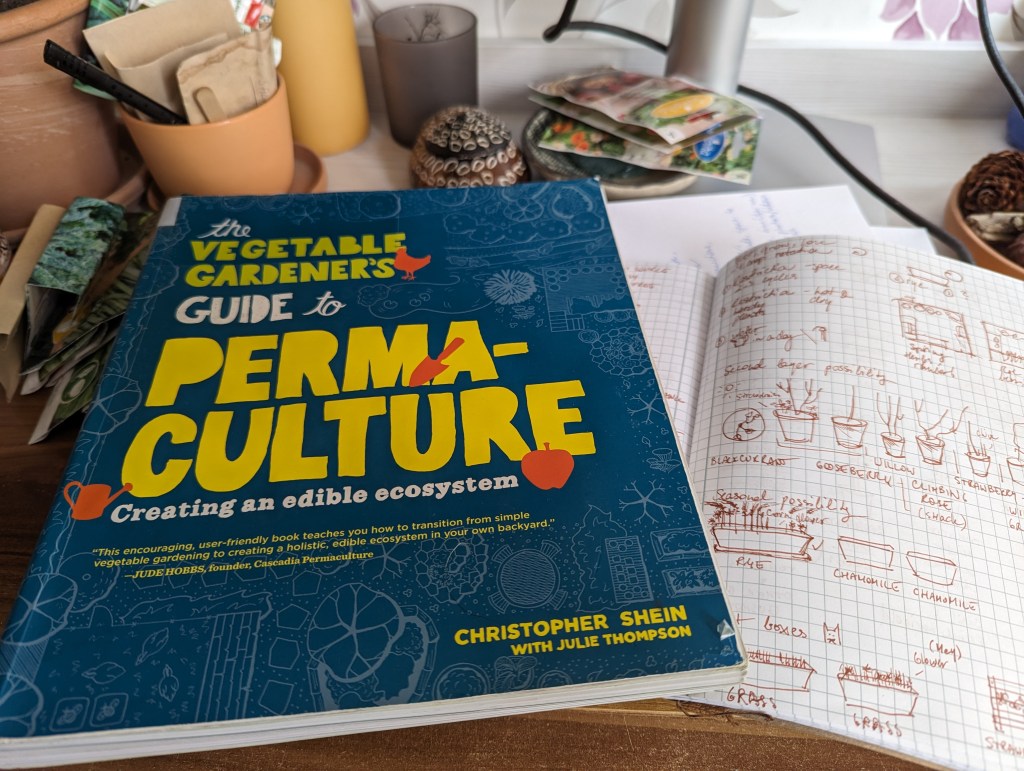
I thought this would be useful for understanding what I already have and what to add, without losing the space in the middle. Instead of adding more planters I decided to just plant more varieties in the existing planters – herbs and greens under the fruit bushes, spinach to accompany the strawberry, marigolds to already widely spread chamomiles and tomatoes to pinch back a bit of space from the cat (she’s already taken a sole ownership of two large containers). This is the first step and I’m later planning of making one for different seasons to maximise the yield and have something flowering the whole summer.
And here it is, my first seasonal design for a small (permaculture) balcony garden
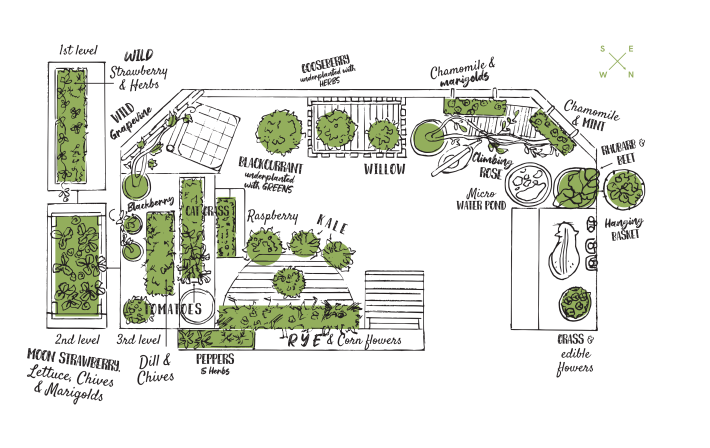
I don’t remember the exact benefits of each companion plant, but there are some common sense rules such as planting flowering plants to attract pollinators and herbs, especially chive, to repel pests. I ended up chucking chive in almost all planters as it seemed to be happy to grow with anything! But there were also some companions I would never have thought of planting together like rhubarb and beet or even introducing marigolds, lettuce and spinach into the strawberry planter. The only plant that didn’t seem to like many companions and preferred its own space seemed to be the raspberry, to which I can completely relate.
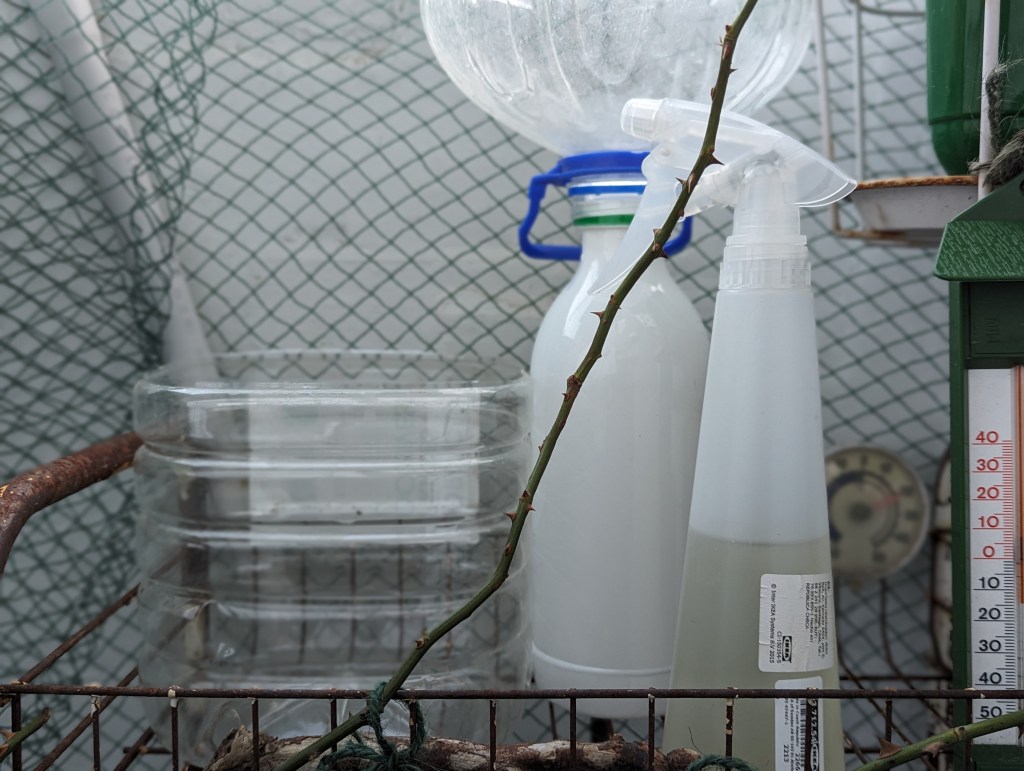
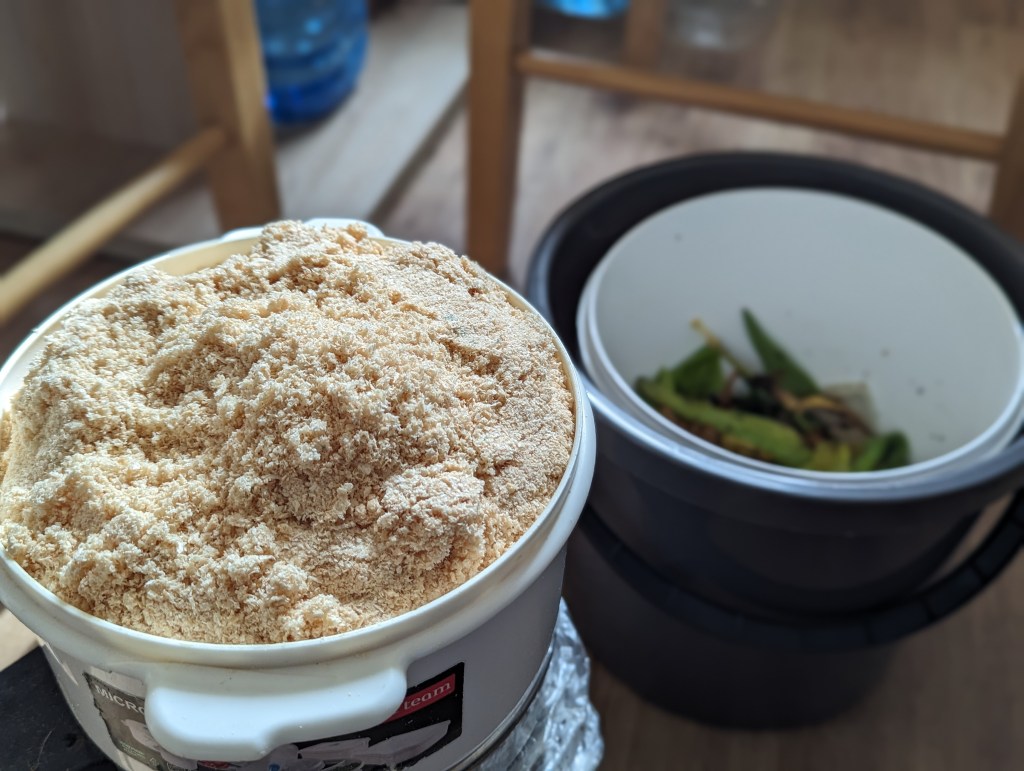
As I finished the sketch I realised it didn’t really look like a permaculture garden yet as I still hadn’t thought much of the regenerative side of things. So I ended up making a very basic rain-water collection system (not sure how much it will collect as I have a closed balcony) and also had a go at making a bokashi bin. I prepared the bran two weeks ago and when I opened it up it did have few specks of blue in it, but I decided to give it a go anyway as the smell was nice. In worst case of scenario I will end up with a good looking waste or if this is working (fingers crossed), will have a nutritious base for my rhubarbs!
The winter returned in the second half of March for two weeks (snow and all) and as we had no sun, I was worried my dill sprouts will wither and die. I don’t have a grow light yet, but I ended up placing a fan nearby, so they could get some air circulation and exercise (they did look very pale and leggy). But once the sun returned the sprouts improved and once I started to take them outside during the day, toughened up considerably. The parsley had a lot better start and is looking really good already. And after a trip to the garden centre I now have few more seeds to sprout!
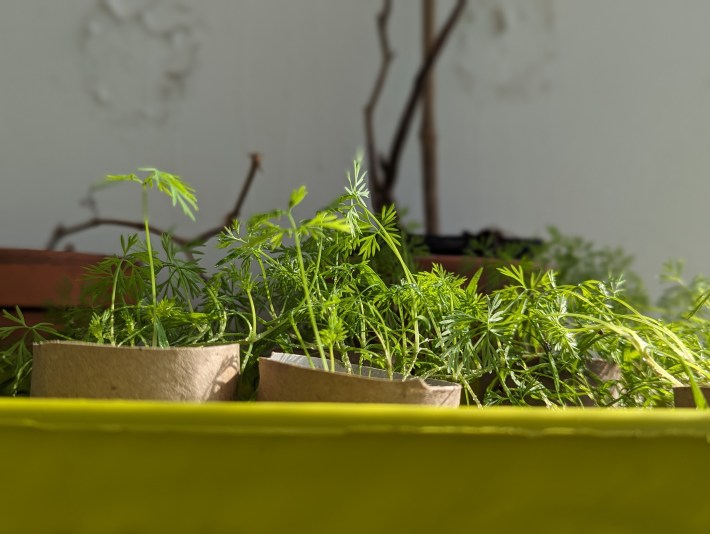
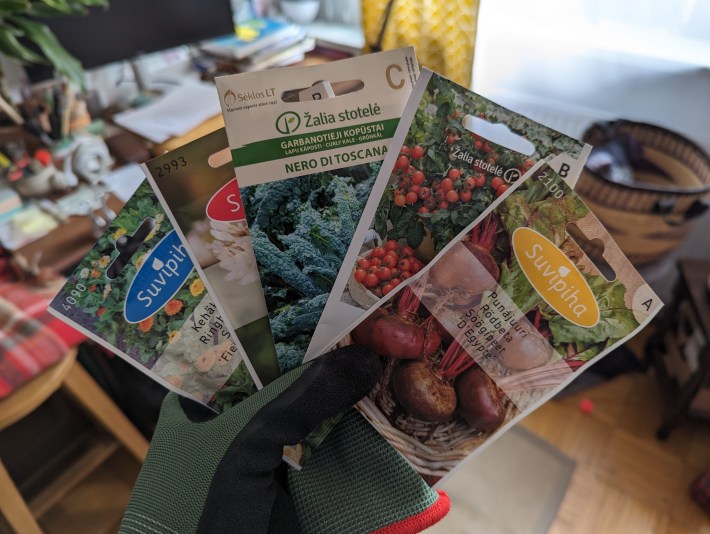
Next time these herbs should be large enough to go outside permanently and the first bokashi bin is probably ready as well. So I will keep you updated how did it go. Meanwhile enjoy the new map as the weather is getting really nice now. I’m also planning a ‘Growing’ edition with all the community gardens next month, so keep an eye on this space!
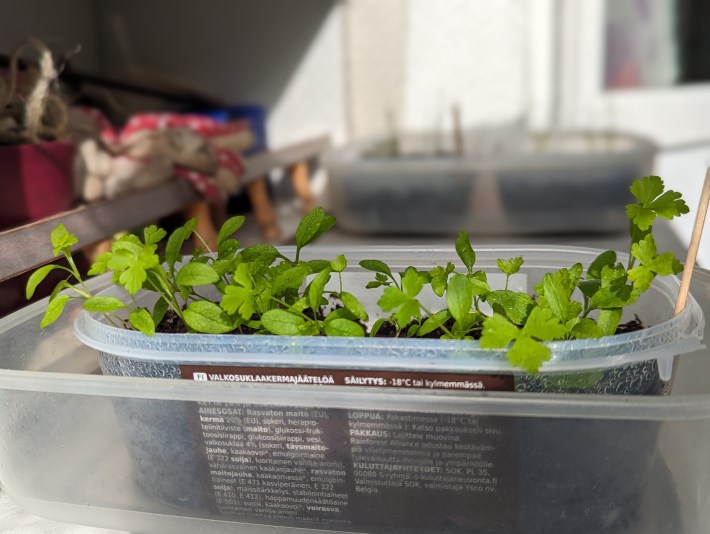
Parsley sprouts in the recycled ice-cream container
 Helen Ilus